
As the semiconductor industry continues to advance, the required levels of reliability and environmental resistance for equipment components are also increasing.
Aluminum-based materials are widely used for various semiconductor equipment parts due to their excellent light weight, high thermal conductivity, and superior machinability. However, they possess an inherent limitation—a lack of resistance to plasma environments and harsh chemicals.
In particular, in semiconductor process environments where extreme temperatures and aggressive chemical reactions are involved, the surface of aluminum can be easily damaged. This degradation may lead to reduced equipment performance and shortened component lifespan.
As a result, there is a growing demand for surface treatment technologies that can enhance functional properties such as corrosion resistance, surface hardness, and electrical insulation, while maintaining the original advantages of aluminum.
In this article, we will introduce anodizing—a representative surface treatment technology that effectively addresses these challenges.
■ What Is Anodizing?
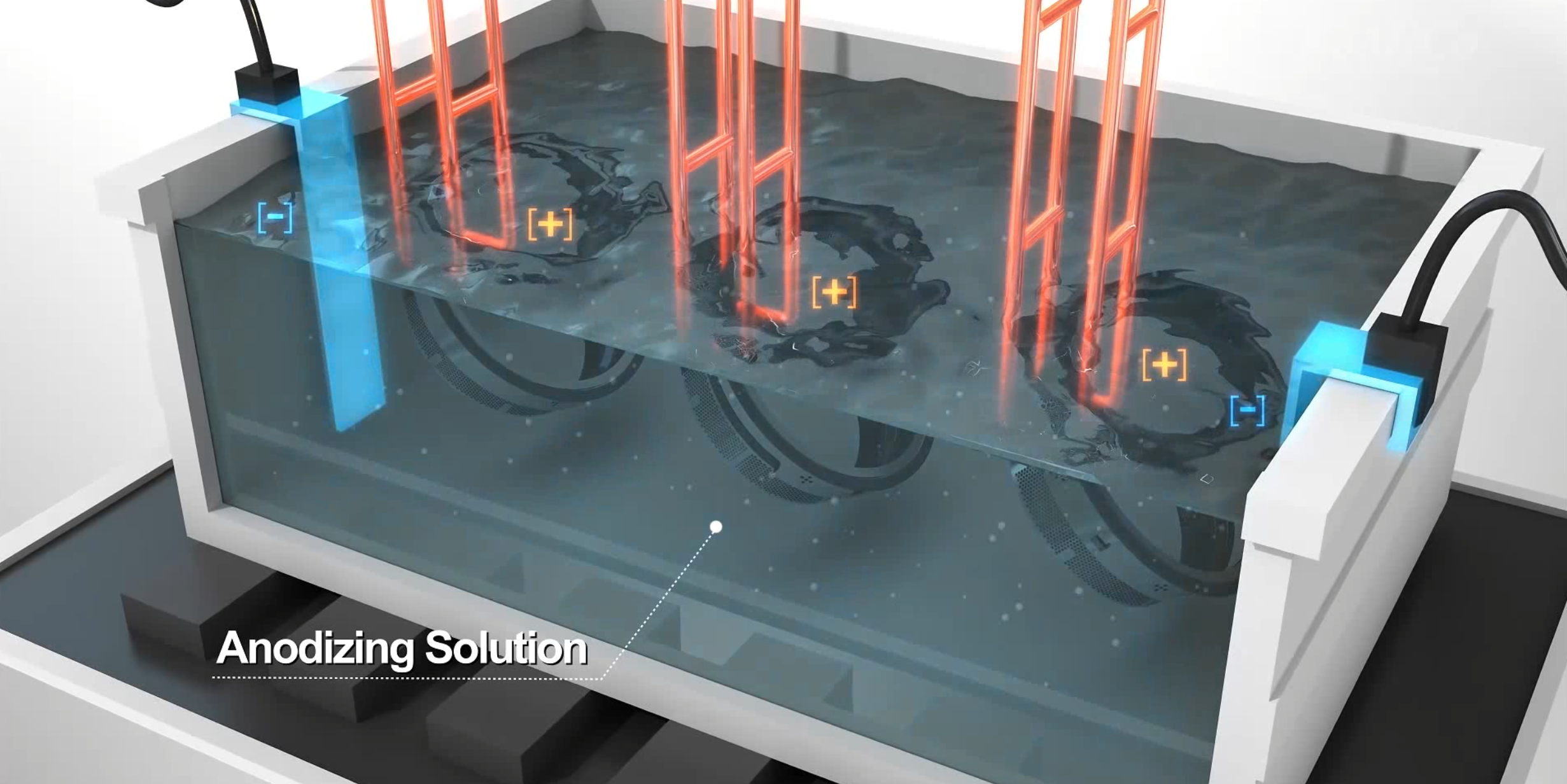
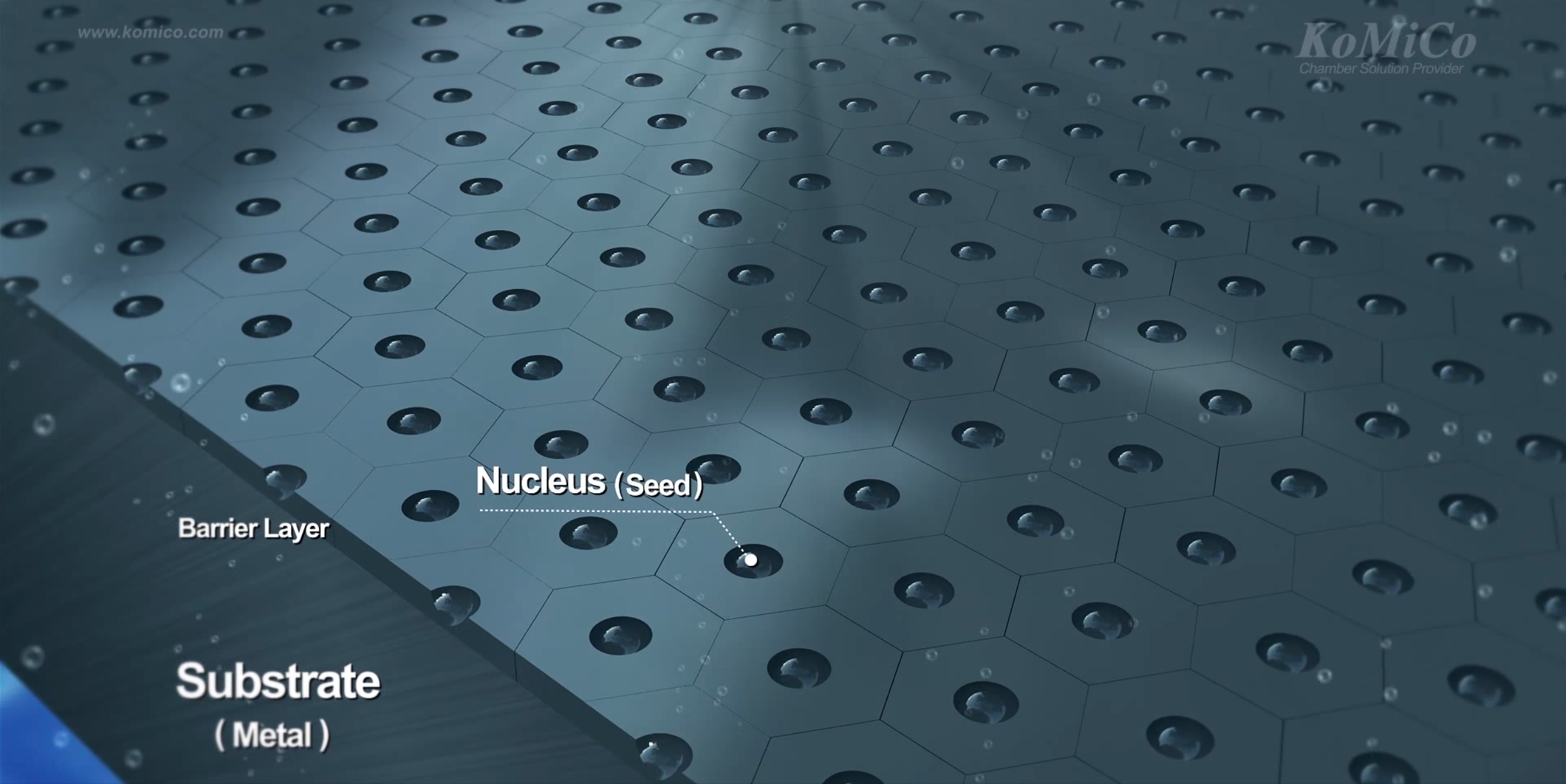
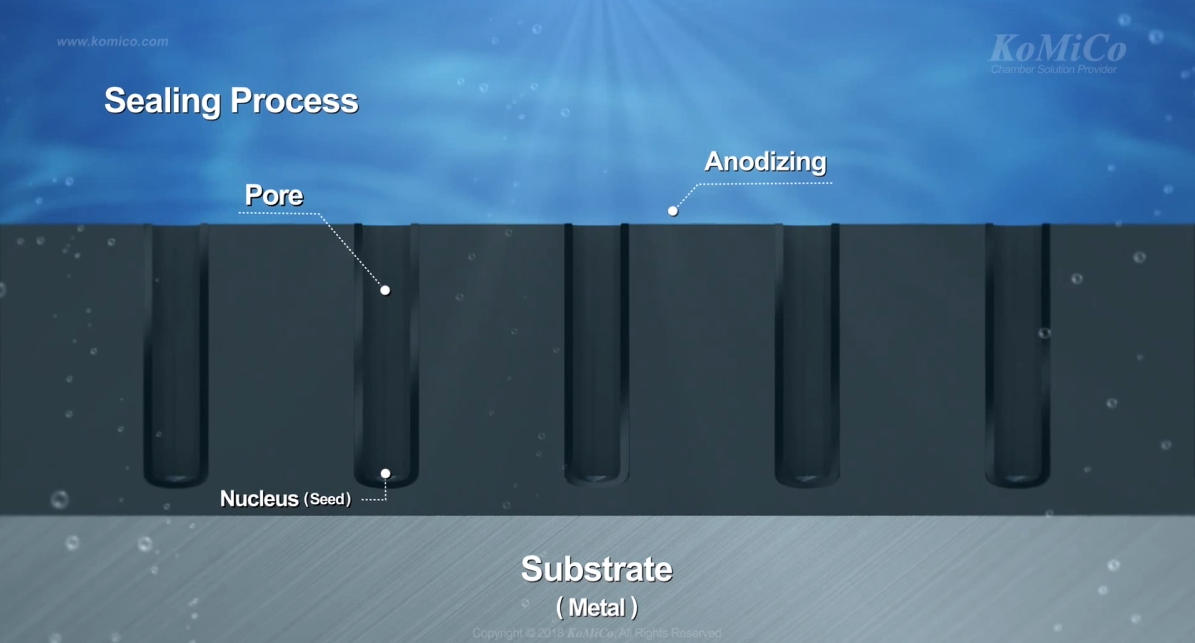
Anodizing, also known as "anodic oxidation" is a surface treatment technology that artificially oxidizes the surface of aluminum to form a dense and durable oxide film.
This process involves immersing aluminum parts in an electrolyte solution and applying an electrical current, which induces the formation of an aluminum oxide (Al₂O₃) layer on the surface.
The resulting oxide film is much thicker and harder than the naturally occurring oxide layer on aluminum, significantly enhancing its corrosion resistance, wear resistance, electrical insulation, and thermal stability.
Moreover, anodizing maintains aluminum's inherent advantages—light weight and excellent machinability—while enabling stable performance even in plasma environments and both wet and dry chemical process conditions.
Anodizing can be broadly categorized into sulfuric acid anodizing and phosphoric acid anodizing.
While both methods are based on the same electrochemical principles, they differ in terms of the electrolyte used, properties of the oxide film produced, and intended application areas.
| Category | Sulfuric Acid Anodizing | Phosphoric Acid Anodizing |
| Primary Purpose | To provide electrical insulation properties and surface protection for semiconductor components |
|
| Key Characteristics | Excellent hardness and insulating properties |
Excellent corrosion resistance |
| Hardness (Hv) | Approx. 400 ~ 500 | Approx. 350 ~ 400 |
| Volume Resistivity (Ω·cm) | E+9 ~ E+10 | |
| Film Thickness & Structure | Relatively thick and robust oxide layer formation |
Dense oxide layer with high chemical resistance |
The key technical features of anodizing are as follows:
▪ Formation of a Hard Oxide Layer
The anodized oxide layer typically exhibits a Vickers hardness of approximately 300 to 600 Hv, offering a significantly harder surface compared to untreated aluminum.
▪ Excellent Electrical Insulation
Anodized surfaces possess high electrical resistivity, making them suitable for components where electrical insulation is critical. This is especially important in semiconductor equipment, where electrical interference must be minimized.
▪ Enhanced Corrosion Resistance
The oxide film effectively blocks external oxidation and chemical reactions, delivering outstanding anti-corrosion performance—particularly under humid conditions or mildly acidic/alkaline environments.
▪ Surface Uniformity and Precision Control
The thickness of the oxide layer—typically ranging from a few micrometers to around 50 μm—can be precisely controlled, enabling customized surface treatments tailored to the specific requirements of each component.
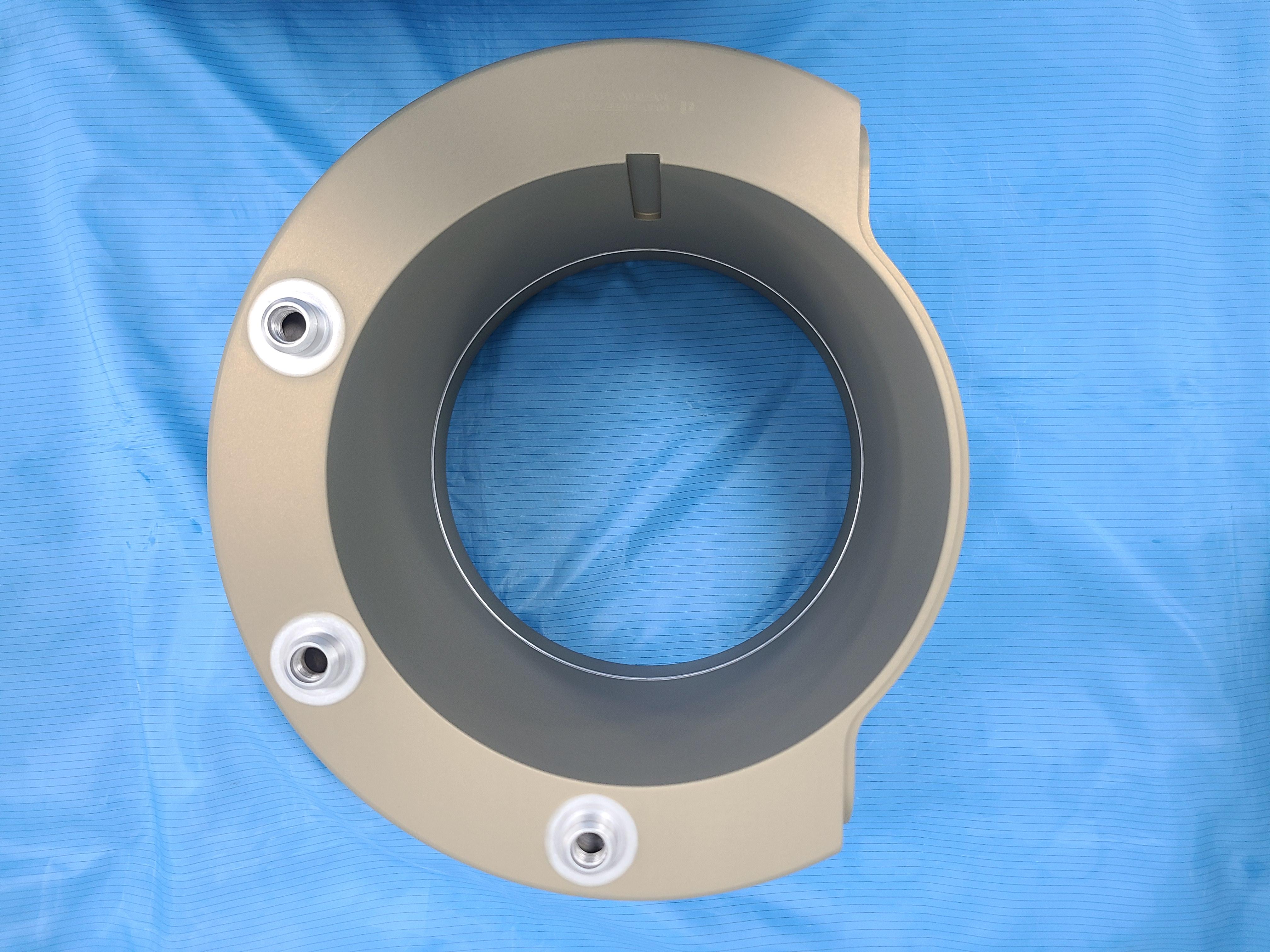
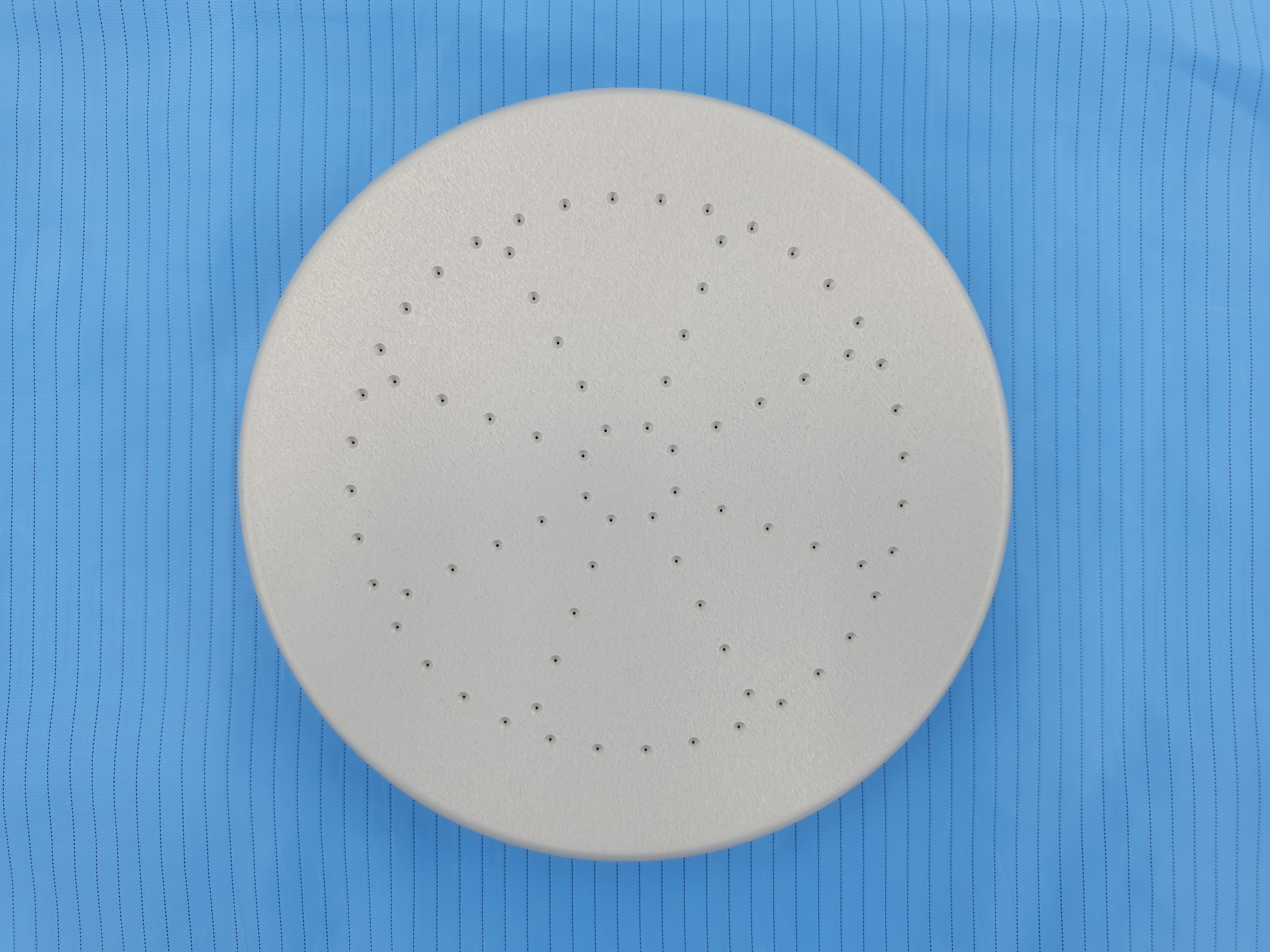
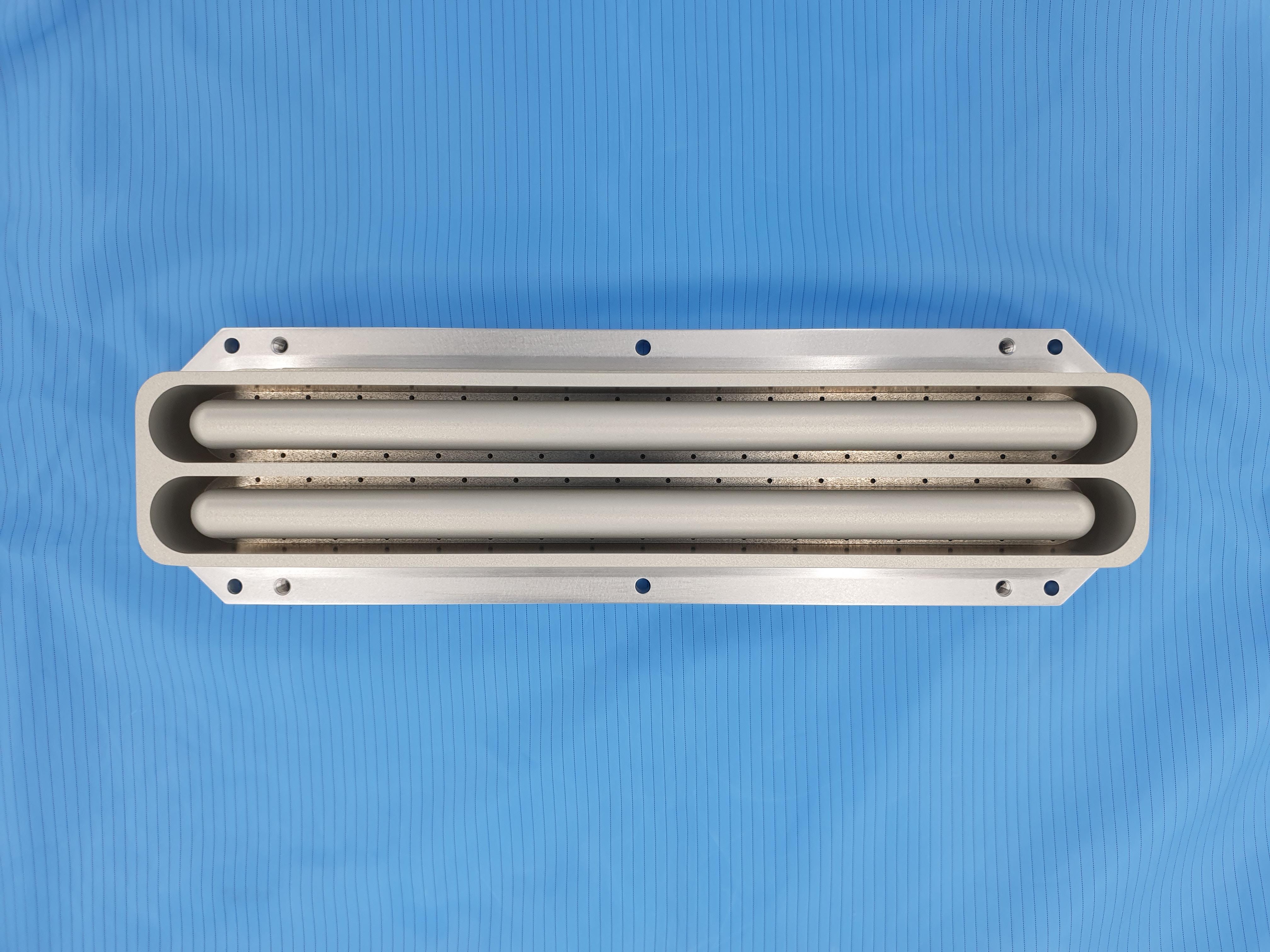
KoMiCo’s anodizing technology plays a key role in overcoming the inherent limitations of aluminum components and enhancing the overall reliability of semiconductor processes.
By offering precise thickness control, excellent electrical insulation, and strong chemical resistance, KoMiCo’s anodizing treatment ensures high stability for a wide range of equipment parts. It can also be effectively integrated with high-performance coatings such as APS, PVD, AD, and ARC, enabling enhanced surface functionality and durability.
In our next article, we will introduce KoMiCo’s Arc Coating technology.
Arc Coating is a surface treatment method in which a metal target is instantaneously melted using an electric arc and then decomposed into fine particles that are sprayed and deposited onto a substrate. This technology enables the formation of high-strength, high-adhesion thin films, making it highly effective in suppressing particle generation.
We look forward to sharing more with you in the next post. Thank you for your continued interest!
<About KoMiCo>
KoMiCo, established in 1996, was the first company in Korea to commercialize cleaning and coating services for semiconductor equipment components. With global operations spanning the United States, China, Taiwan, and Singapore, KoMiCo has earned quality certifications from some of the world’s leading semiconductor manufacturers, solidifying its position as a Global No.1 in the industry.
Building on its advanced cleaning and coating technologies, KoMiCo continues to enhance its core business while expanding into the development and supply of key OEM components for semiconductor equipment. Moving forward, the company remains committed to improving customers’ productivity and yield, and aims to become a global leader in the semiconductor component cleaning, coating, and manufacturing industry.