
Semiconductor manufacturing continues to advance toward greater miniaturization and higher integration. In particular, in etching processes conducted at the sub-nanometer scale, the performance requirements for equipment components—such as plasma resistance, surface stability, and wear resistance—are becoming increasingly stringent.
In this environment, PVD (Physical Vapor Deposition) coating technology is gaining attention as a high-performance coating solution, offering high hardness and precise surface control for semiconductor equipment components operating under extreme conditions.
This article explores the key features and deposition mechanisms of PVD Coating technology.
■ What is PVD Coating?
PVD Coating (Physical Vapor Deposition) is a coating process in which a solid material is evaporated or ionized in a vacuum and deposited as a thin film on the surface of a substrate.
PVD Coating can produce high-strength, high-precision films that maintain their structural integrity even under high-temperature and high-energy environments. This makes it highly effective for extending the lifetime of semiconductor equipment parts and enhancing process reliability.
The principle behind PVD Coating begins with the evaporation or ionization of a target material in a vacuum environment, forming metal or ceramic particles. These particles are generated through methods such as electron beam heating or high-energy ion bombardment (sputtering), and then travel directionally with high kinetic energy toward the substrate.
In high-vacuum conditions, the particles avoid collisions with oxygen or other impurities, allowing for the formation of ultra-pure thin films.
When the particles reach the substrate, they strongly adhere to the surface, forming a dense, uniform thin film with precisely controlled thickness ranging from tens of nanometers to several micrometers. These films typically exhibit exceptional hardness and strong adhesion, enabling them to withstand prolonged exposure to plasma environments without degradation or damage.

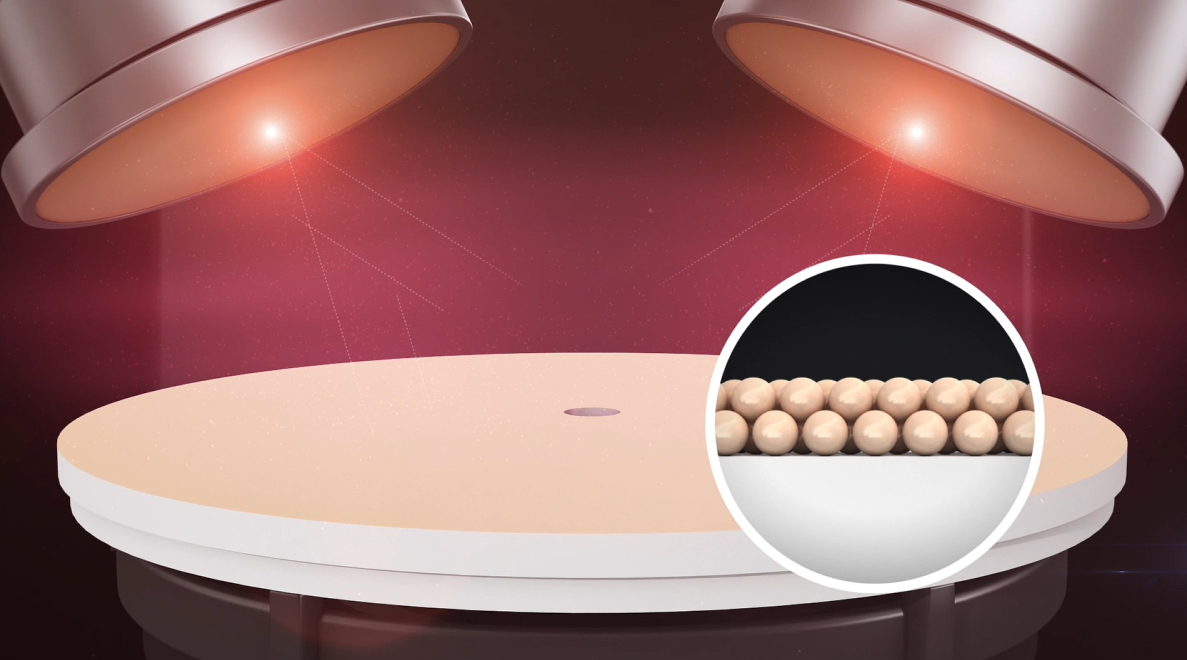
PVD Coating can be broadly categorized into E-beam and Sputter methods, depending on the deposition technique. Each method offers distinct process characteristics and advantages.
E-beam PVD Coating involves using an electron beam to heat a solid material at high temperatures, causing it to evaporate. The resulting vapor is then deposited onto the surface of the substrate.
This method excels in producing high-purity thin films and allows for precise control of film thickness, making it especially suitable for coating high-reliability components used in high-temperature and high-energy environments.
In contrast, Sputter PVD Coating utilizes plasma-generated high-energy ions that collide with a target material, causing surface atoms to be ejected. These atoms are then deposited onto the substrate.
This method is known for its excellent adhesion and the formation of a dense and uniform structure, making it well-suited for coating components with complex geometries. It is widely applied to various etching process components where precise and consistent coatings are required.
| Coating Material | APS - Y₂O₃ | PVD - Y₂O₃ | |
| Roughness (Ra, ㎛) | 2~6 (controllable) |
≤ 0.05 | |
| Physical Property |
Porosity (%) | 3~5 | Zero |
| Hardness (Hv) | 400~450 | > 1,000 | |
The key advantages of PVD Coating are as follows:
1. Formation of a High-Density and Uniform Structure
PVD Coating is a process in which a solid material is physically evaporated or ionized and deposited as a thin film onto a substrate under vacuum conditions. This enables the formation of a high-density coating layer with a highly compact and uniform structure.
2. High-Hardness Thin Film Implementation
KoMiCo’s PVD Coating can achieve a hardness of over 1,000 Hv, providing exceptional resistance to plasma damage and wear-related erosion, effectively protecting semiconductor equipment components.
3. Ultra-Precise Surface Roughness Control
The coating's surface roughness (Ra) can be precisely controlled to ≤ 0.05 μm, significantly reducing the risk of particle generation and detachment during operation.
This level of structural perfection ensures stable coating performance even under extreme conditions such as those found in etching processes. Ultimately, it contributes to high-quality wafer production and enhanced process consistency across semiconductor manufacturing lines.
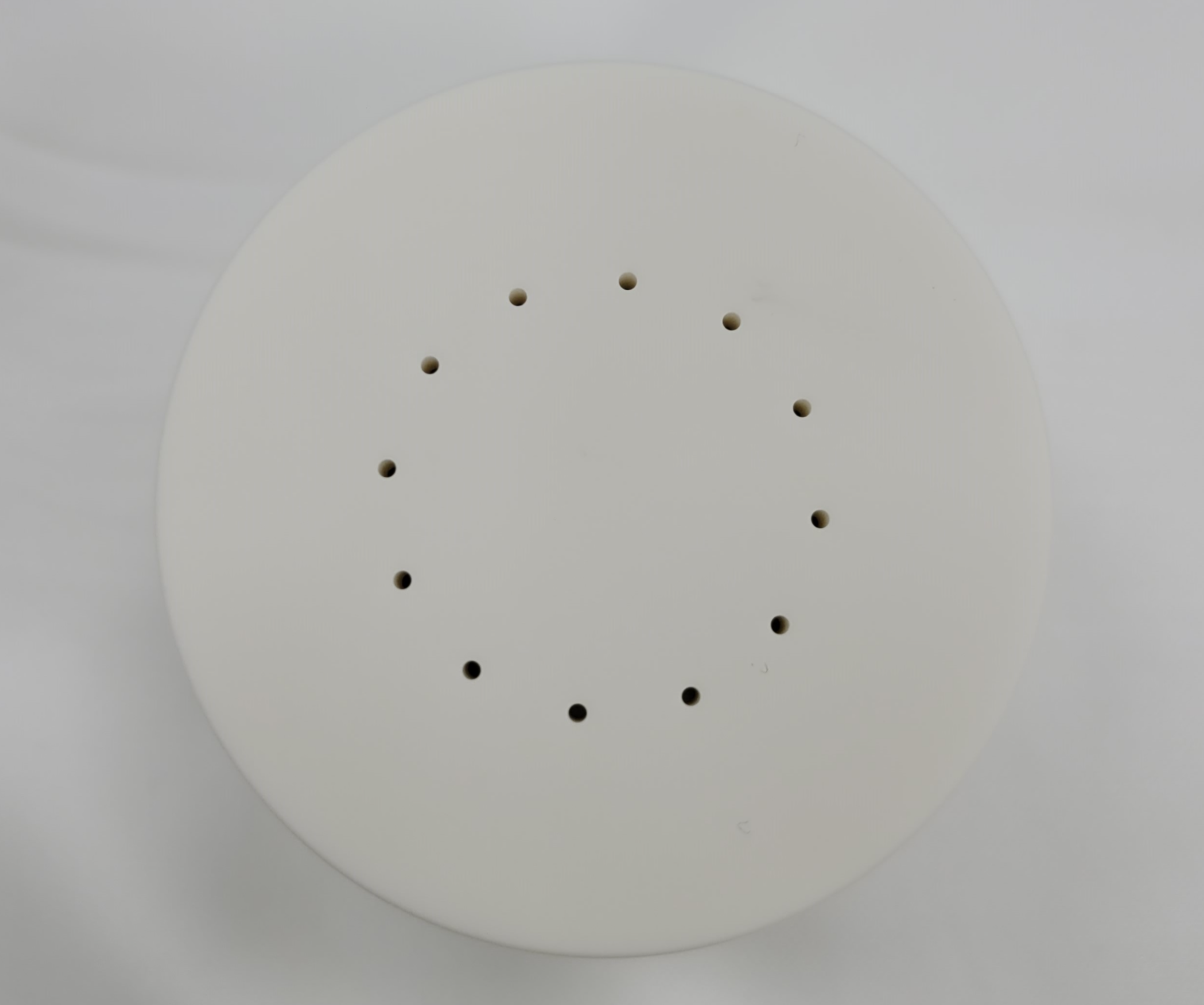
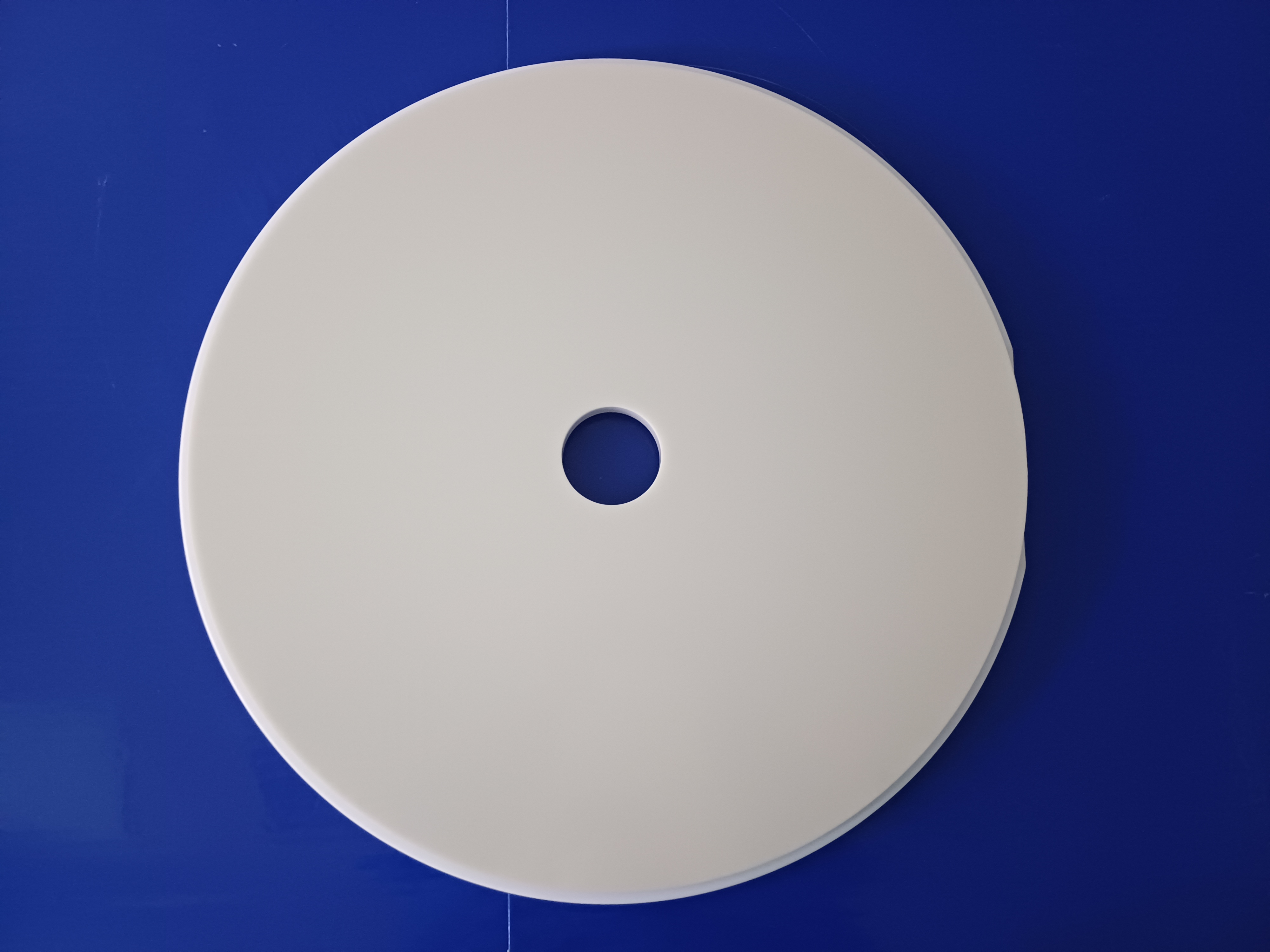
PVD Coating is applied to critical components such as Gas Injectors and Windows in semiconductor etching processes, where sensitivity to particles is especially high. The PVD coating layer, with its high density and low porosity, effectively prevents byproducts or target material from flaking off and generating particles, thereby ensuring process consistency.
Thanks to these technological advantages, KoMiCo’s PVD Coating is recognized as a high-value solution that enhances the precision of etching processes, improves equipment reliability, and contributes to overall yield improvement in semiconductor manufacturing.
In the next article, we will introduce another of KoMiCo’s core surface technologies: Anodizing.
Anodizing plays a key role in extending the lifetime of equipment components by improving the corrosion resistance and surface hardness of aluminum-based materials, while also helping to ensure process stability.
Stay tuned to learn how KoMiCo differentiates its Anodizing technology, and we look forward to sharing more insights with you in the next installment.
<About KoMiCo>
KoMiCo, established in 1996, was the first company in Korea to commercialize cleaning and coating services for semiconductor equipment components. With global operations spanning the United States, China, Taiwan, and Singapore, KoMiCo has earned quality certifications from some of the world’s leading semiconductor manufacturers, solidifying its position as a Global No.1 in the industry.
Building on its advanced cleaning and coating technologies, KoMiCo continues to enhance its core business while expanding into the development and supply of key OEM components for semiconductor equipment. Moving forward, the company remains committed to improving customers’ productivity and yield, and aims to become a global leader in the semiconductor component cleaning, coating, and manufacturing industry.
'Business' 카테고리의 다른 글
| [KoMiCo Lab] Surface Treatment Technology for Withstanding Extreme Semiconductor Process Environments: Anodizing (0) | 2025.07.07 |
|---|---|
| [KoMiCo Lab] 극한 반도체 공정 환경을 견디는 표면처리 기술 : Anodizing (2) | 2025.07.07 |
| [KoMiCo Lab] 초고밀도 박막 기술의 결정체, PVD Coating의 진화 (1) | 2025.06.25 |
| [KoMiCo Lab] Particle-Control Specialized Technology: AD Coating (1) | 2025.06.24 |
| [KoMiCo Lab] Particle 제어 특화 기술 AD Coating (2) | 2025.06.24 |